Cannery Row & the Steinbeck Era
Sardines, Steinbeck & the Rise and Fall of an Industry (1900–1950s) · Monterey County
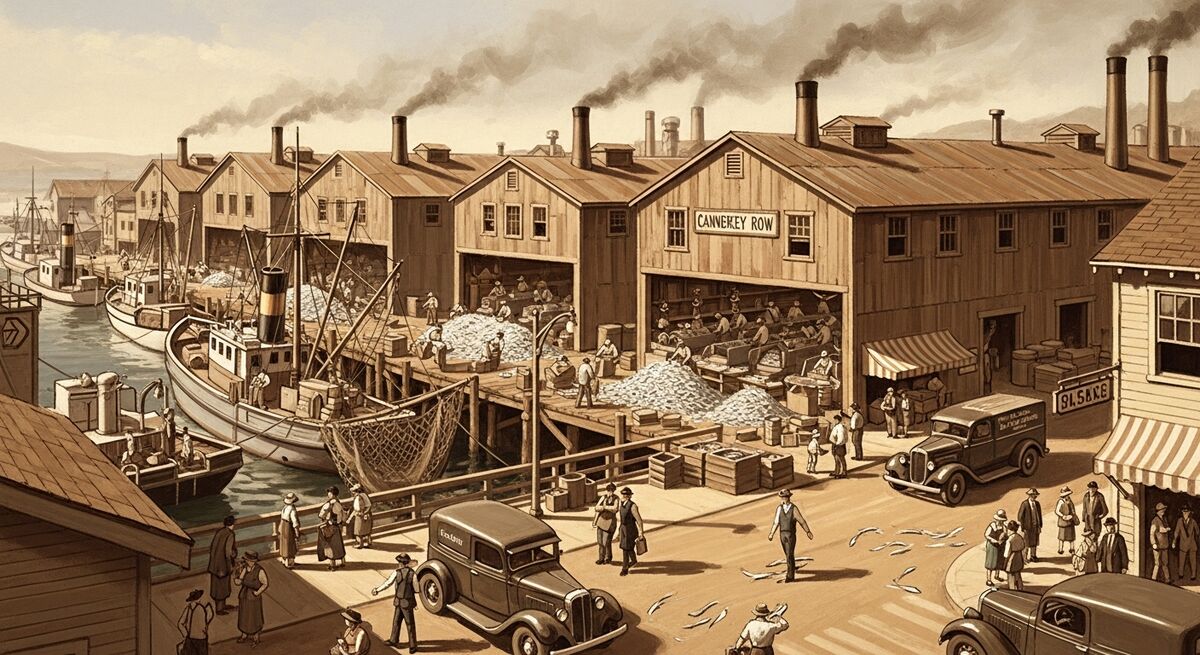
In the early 20th century, Monterey became one of the world's largest sardine fishing and canning centers. At its peak, Cannery Row processed 250,000 tons of sardines per year. The industry attracted workers from around the world, shaped the city's character, and inspired John Steinbeck's most beloved works — before collapsing almost overnight.
Timeline
First Cannery Opens
Frank Booth opens the first commercial sardine cannery on what would become Cannery Row. The Pacific sardine, found in vast schools in Monterey Bay, proves easy to catch and process. Within a decade, a dozen canneries line Ocean View Avenue.[1]
Steinbeck Works the Row
John Steinbeck works briefly at the Hovden Cannery in 1928 and absorbs the culture that will define 'Cannery Row' (1945) and 'Sweet Thursday.' At its peak the street employed thousands of immigrant Chinese, Japanese, Filipino, Spanish, and Italian laborers and ran 24 hours during sardine season. The stench was legendary.[2]
Steinbeck Publishes Cannery Row
John Steinbeck's novel 'Cannery Row' immortalizes the street and its characters — based on real people including marine biologist Ed Ricketts (Doc in the novel), whose Pacific Biological Laboratories still stands at 800 Cannery Row. The building is a California Historical Landmark.[2]
The Sardine Collapse
The Pacific sardine population collapses dramatically due to a combination of overfishing and a natural ocean cycle shift. By 1952, almost all canneries have closed. Workers leave; buildings stand empty. The Row that Steinbeck celebrated exists only in his pages.[3]
Aquarium Reinvents the Row
The Hovden Cannery — the last to close in 1973 — is transformed into the Monterey Bay Aquarium, which opens in 1984 and becomes one of the world's premier marine science institutions. Cannery Row reinvents itself around tourism, while Steinbeck's legacy draws literary travelers from around the world.[4]
Then & Now
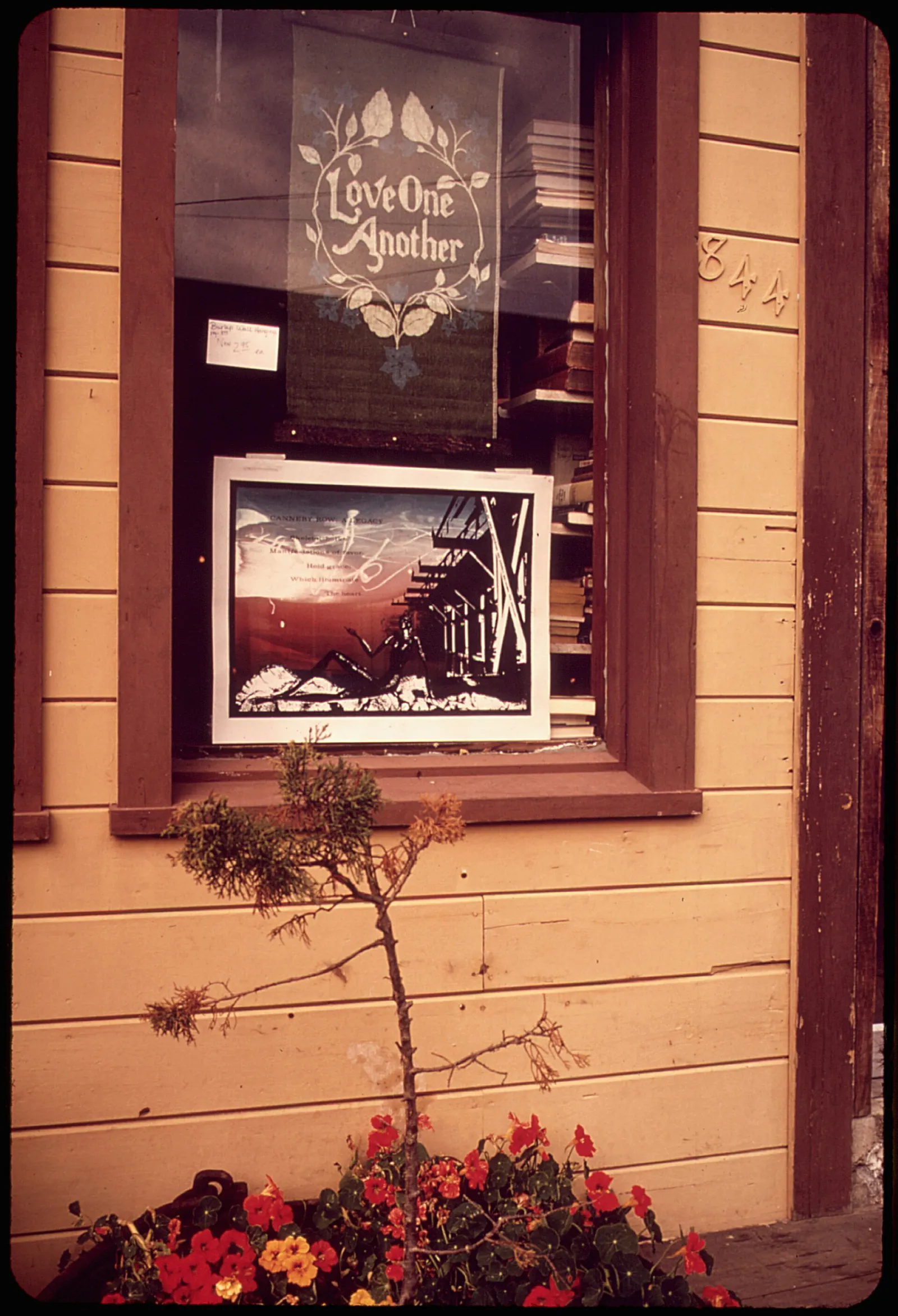
Archive photos paired with the same place today.

Visit these historical sites
Real places in our directory connected to Cannery Row & the Steinbeck Era.
Related reading from our blog
- The Best Restaurants on Cannery Row: Beyond the Tourist Traps
Discover Monterey's hidden gems! From fresh seafood to cozy cafes, explore the best restaurants on Cannery Row that offer a taste of local culture beyond the tourist traps.
- Pumpkin Patches and Fall Harvest Festivals Near Monterey Bay
As the leaves begin to turn and the air takes on a crispness, Monterey Bay transforms into a vibrant tapestry of fall hues, making it the perfect backdrop for seasonal festivities. If you're searching for family-friendly activities, charming pumpkin patches, and lively harvest festivals, look no fur
- Fall Color Drives Along Highway 1 and the Santa Cruz Mountains
As the crisp autumn air sweeps across the Monterey Bay Area, vibrant hues of red, orange, and gold transform the landscape into a stunning natural spectacle. Fall is more than just a season; it’s a showcase of the region’s beautiful foliage, making it the perfect time for a scenic drive along Highwa
- Big Sur Waterfalls Road Trip: McWay Falls, Pfeiffer Falls, and More
Experience the breathtaking beauty of Big Sur on a waterfall road trip featuring McWay Falls and Pfeiffer Falls. Discover local tips and stunning sights along the way!
Sources
Citations behind the dates, names, and numbers on this page.
- 1Monterey County Historical Society — Cannery Row
Local-history record of the 1902 first cannery and the row’s peak years.
- 2National Steinbeck Center — About John Steinbeck
Steinbeck biographical timeline (Salinas, Cannery Row, Pacific Biological Laboratories).
- 3NOAA Fisheries — Pacific sardine population history
Primary source for the post-1945 sardine fishery collapse.
- 4Monterey Bay Aquarium — Our story
1984 opening date and conversion of the former Hovden Cannery building.
- 5