Agriculture — The Garlic Capital & Wine Country
From Cattle Ranches to the Garlic Capital of the World · San Benito County
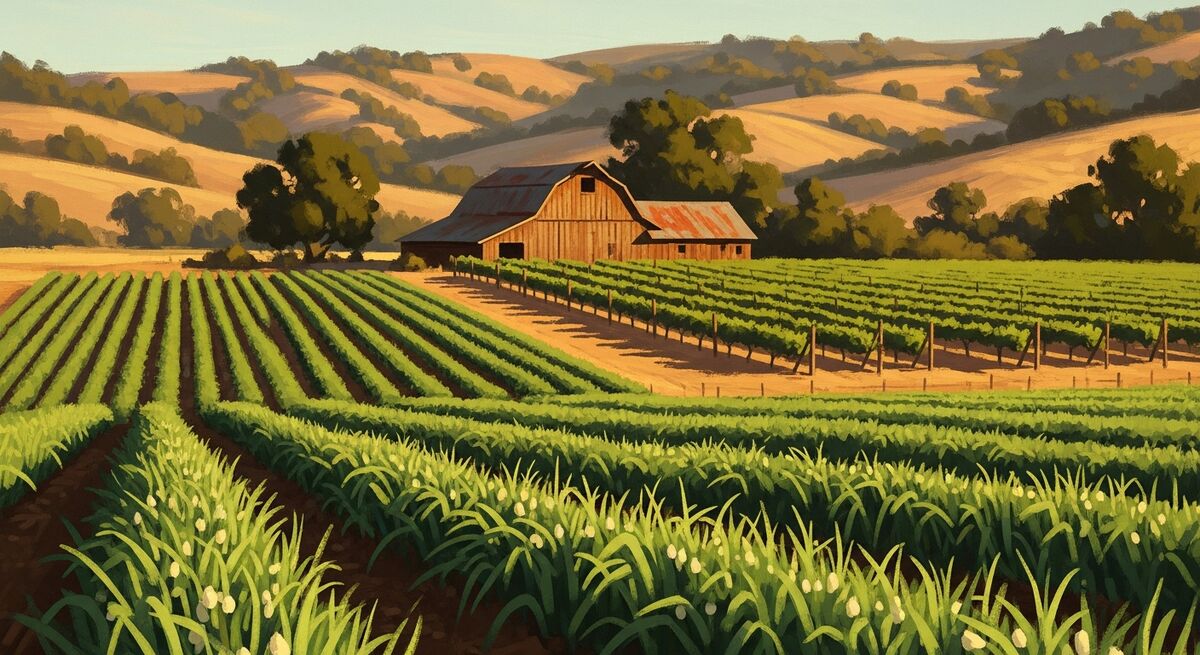
San Benito County's economy has been rooted in agriculture since the rancho era. The warm inland valley proved ideal for cattle, then row crops, then the pungent garlic that made Gilroy and the San Benito Valley synonymous with the aromatic bulb. More recently, a wine industry has taken root in the gravelly soils around Hollister.
Timeline
Cattle & Grain Empire
The breakup of the great Mexican land grants opens the valley to smaller ranchers and farmers. Wheat, barley, and cattle dominate the economy. The Southern Pacific Railroad reaches Hollister in 1871, connecting the valley to San Francisco and the broader markets. The agricultural wealth funds Hollister's Victorian-era downtown, much of which survives today.
Garlic Takes Root
Italian and Japanese immigrant families begin growing garlic commercially in the warm San Benito and Santa Clara valleys. By the 1970s, the Gilroy-Hollister corridor is the garlic capital of the United States. The Gilroy Garlic Festival — started in 1979 — draws 100,000+ visitors annually and celebrates the region's most famous crop.
San Benito Wine Country
Winemakers discover that San Benito County's limestone soils and warm days produce exceptional wines, particularly Rhône varieties and old-vine plantings. Calera Wine Company, founded by Josh Jensen in 1975 on Mount Harlan, produces some of California's finest Pinot Noir from limestone terroir — inspired by Burgundy. The county's wine region remains a hidden gem compared to Paso Robles and the Santa Cruz Mountains.
Visit these historical sites
Real places in our directory connected to Agriculture — The Garlic Capital & Wine Country.
Related reading from our blog
- Carmel Valley Wine Country: A Guide to Tastings, Vineyards, and Pairings
Discover the hidden gem of Carmel Valley Wine Country, where exquisite tastings and breathtaking landscapes await. Your ultimate guide to vineyards, pairings, and local flavors starts here!
- Gilroy Garlic Festival: A Complete Guide to the World's Largest Food Festival
Discover everything you need to know about the Gilroy Garlic Festival, the world's largest food festival, nestled near Monterey Bay. Don't miss out on the fun!
- Hollister: Gateway to Pinnacles and the San Benito Wine Country
Just a short drive from the picturesque cities along the Central Coast lies Hollister, a charming town that serves as the gateway to the stunning Pinnacles National Park and the delightful San Benito Wine Country. Nestled in the rolling hills of San Benito County, Hollister is a vibrant destination
- Wine Country Day Trip: Carmel Valley to Paso Robles Along Highway 101
Discover the perfect day trip from Carmel Valley to Paso Robles along Highway 101, exploring stunning vineyards, breathtaking views, and local culinary delights.