Spanish Exploration & the Mission Era
Alta California's First Capital (1770–1822) · Monterey County
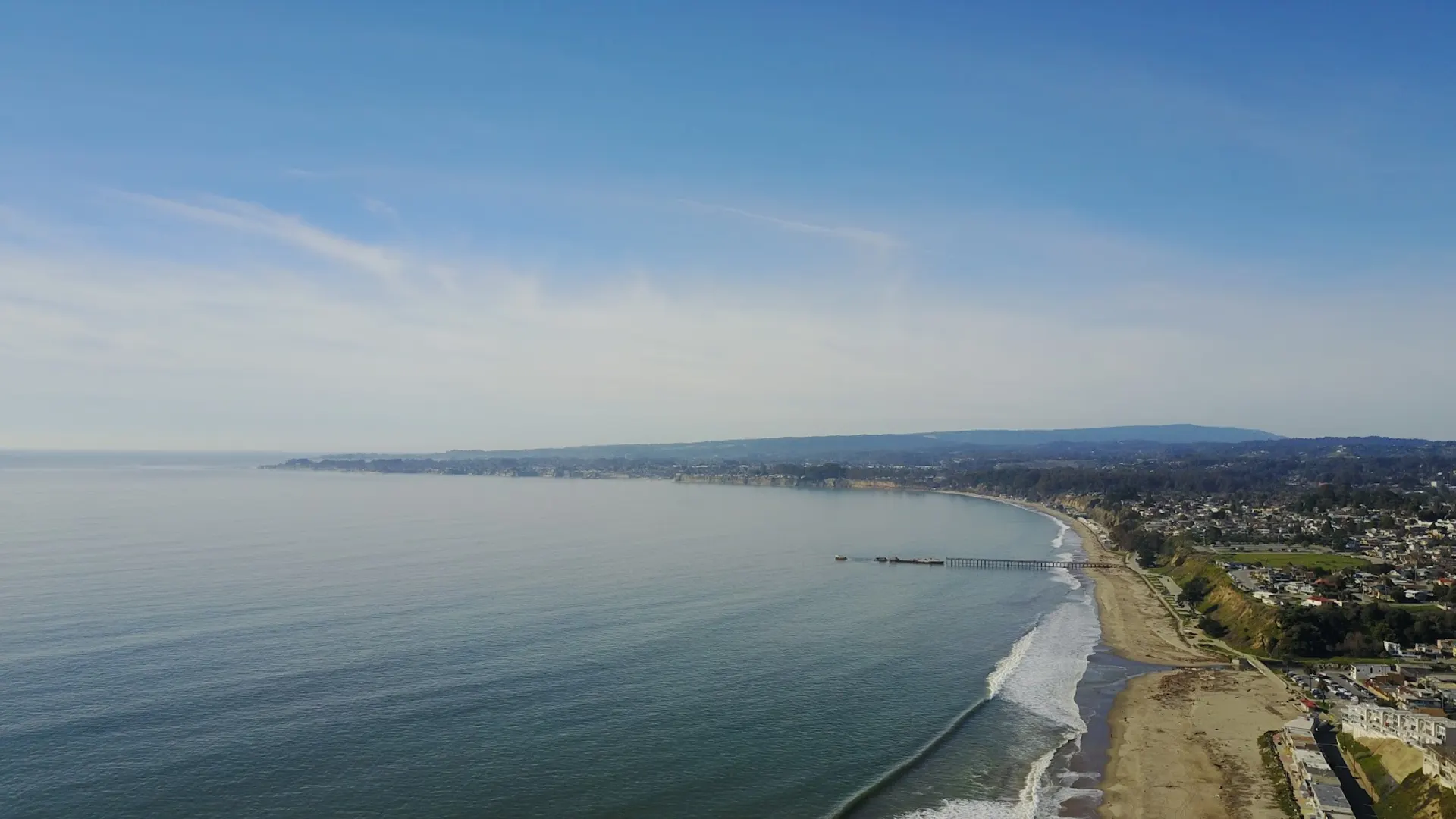
Spanish explorers arrived in Monterey Bay in 1542, but permanent settlement didn't come for over two centuries. When it did, Monterey became the beating heart of Spanish and then Mexican California — the seat of government, the port of entry, and home to the state's founding constitutional convention.
Timeline
Cabrillo Sails Past
Juan Rodríguez Cabrillo, sailing under the Spanish flag, becomes the first European to navigate the California coast. He passes what will become Monterey Bay, noting its immense size but not landing.[2]
Vizcaíno Names the Bay
Sebastián Vizcaíno anchors in the bay on December 16 and names it Puerto de Monterey after the Viceroy of New Spain, the Count of Monterey. He writes glowing reports of its harbor quality — reports that would be considered exaggerated by later visitors.[5]
Serra & Portolá Found Monterey
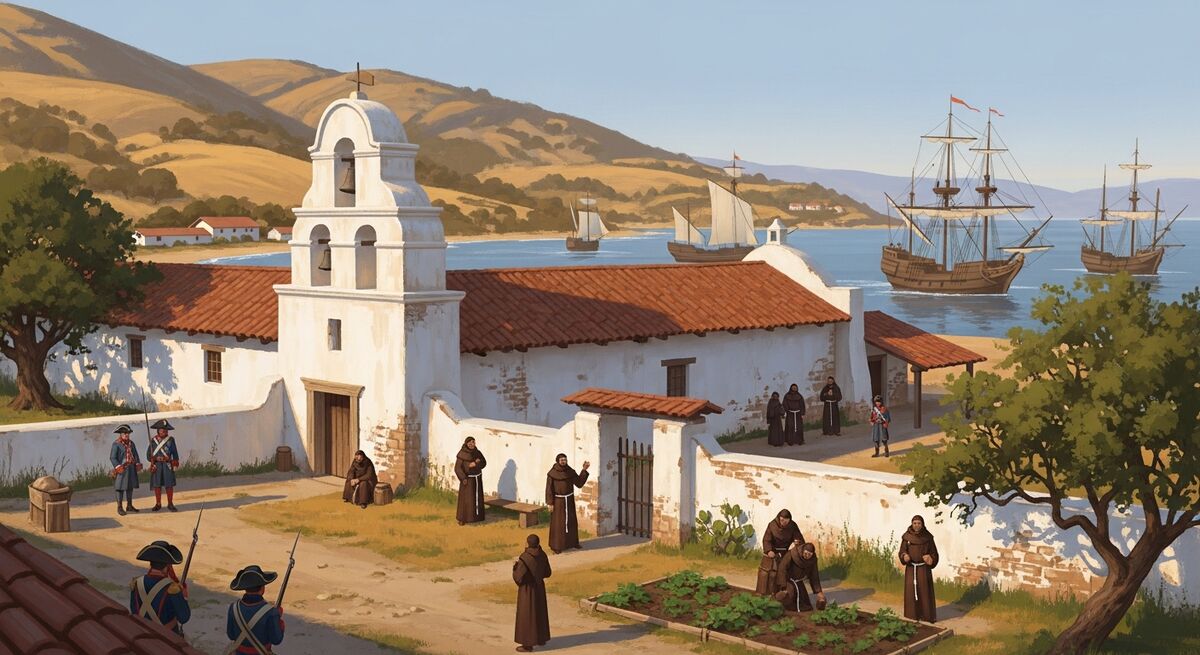
Father Junípero Serra and Governor Gaspar de Portolá establish a presidio and Mission San Carlos Borromeo de Monterey, making Monterey the capital of Alta California. Serra would later relocate the mission to Carmel to be closer to fresh water and away from the soldiers.[1],[3],[4]
Capital of Alta California
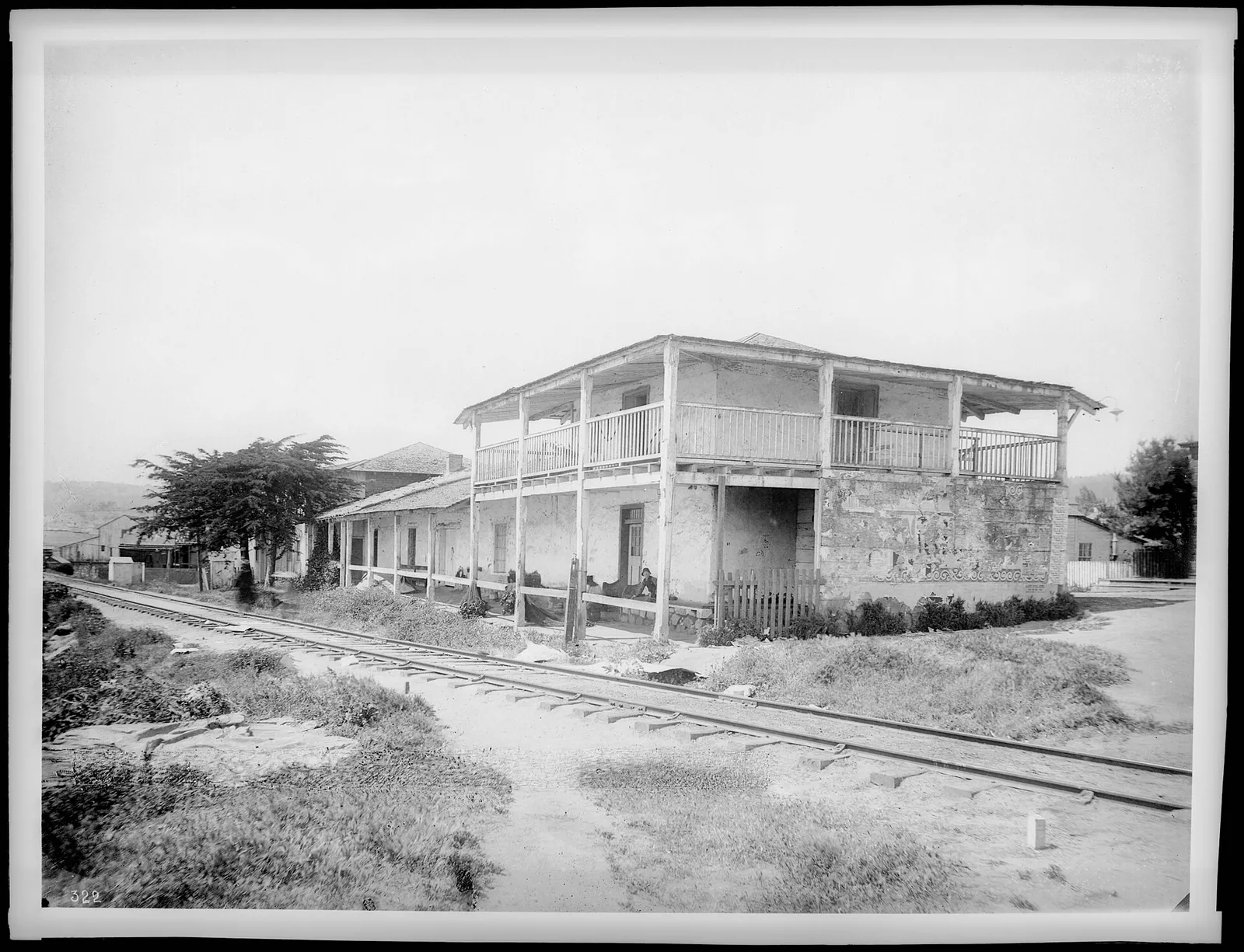
Monterey is formally designated the capital of Spanish Alta California. The Custom House, built in stages through the 1820s, becomes the port of entry for all goods entering California — today it is the oldest governmental building in California.[1]
Bouchard Raids Monterey
Argentine privateer Hipólito Bouchard attacks and burns much of Monterey with two warships, seeking to weaken Spanish colonial power. The raid lasts four days and is the only foreign attack on California soil during the Spanish era. Residents flee to the countryside and return to find the town largely destroyed.[4]
Then & Now
Archive photos paired with the same place today.

Visit these historical sites
Real places in our directory connected to Spanish Exploration & the Mission Era.
Related reading from our blog
- A Visitor's Guide to Pebble Beach: Beyond the Golf Course
Pebble Beach is best known for its world-class golf courses, but there is so much more to explore beyond the greens. For visitors who aren’t golfing, Pebble Beach offers breathtaking coastal views, rich natural beauty, and delightful dining experiences. Discover iconic landmarks like the Lone Cypress and the Ghost Tree, stroll along the sandy beaches, or enjoy fine cuisine at o
- Big Sur: Living and Visiting the Most Remote Stretch of California Coast
Big Sur, a stunning stretch of California coastline, is often considered one of the most picturesque areas in the United States. Stretching roughly 90 miles along the coast from Carmel-by-the-Sea to San Simeon, this rugged landscape is a harmonious blend of majestic cliffs, ancient redwoods, and swe
- 10 Most Romantic Restaurants in Carmel-by-the-Sea
When it comes to romance, few places can rival the charm of Carmel-by-the-Sea. Nestled along California's stunning Central Coast, this quaint village exudes an enchanting blend of coastal beauty, artistic flair, and delectable cuisine. Whether it’s a special anniversary, a first date, or simply a we
- Silicon Valley to Pinnacles: A Wild Weekend at California's Newest National Park
Discover the wild beauty of Pinnacles National Park. This comprehensive guide covers everything from Silicon Valley day trips to local tips for your weekend adventure!
Sources
Citations behind the dates, names, and numbers on this page.
- 1California State Parks — Monterey State Historic Park
Custom House, Presidio, and Royal Presidio Chapel founding dates.
- 2National Park Service — Juan Rodriguez Cabrillo NM (history)
Cabrillo’s 1542 California coastal voyage.
- 3National Park Service — Juan Bautista de Anza NHT
Spanish colonization of Alta California, Portolá/Serra expedition context.
- 4Wikipedia — Presidio of Monterey (historical)
1770 founding by Portolá and Serra; 1818 Bouchard raid.
- 5Wikipedia — Sebastián Vizcaíno
1602 naming of Monterey Bay for the Conde de Monterrey.